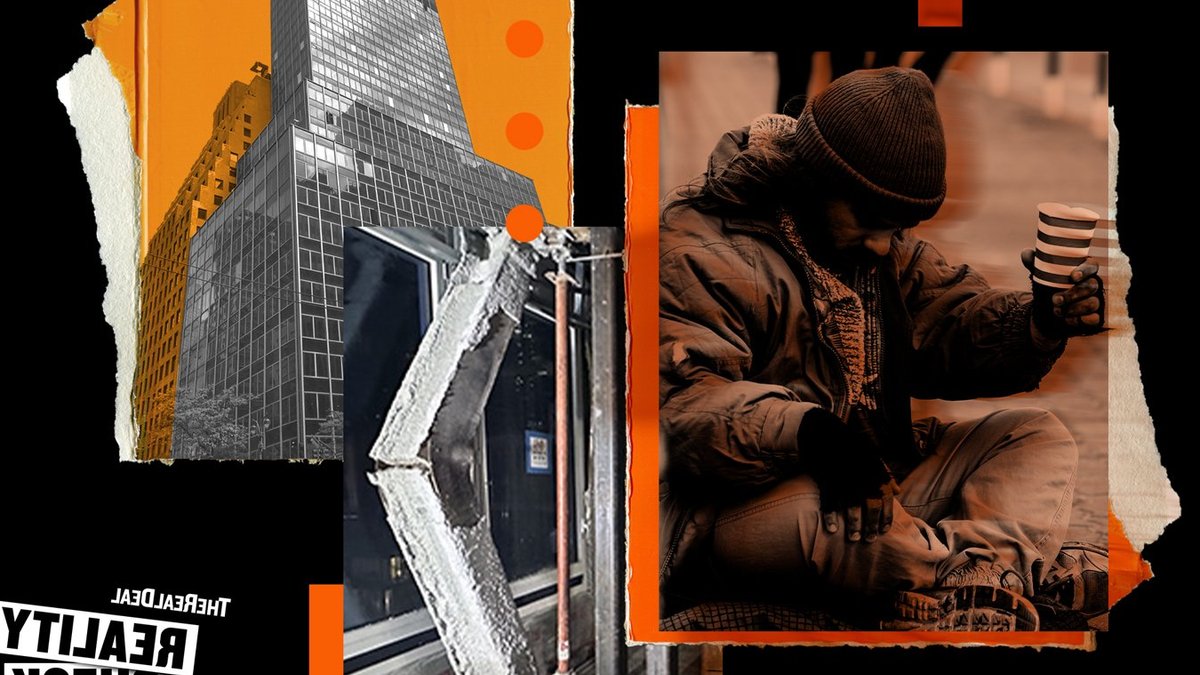
The debate over office conversions has taken a dramatic turn, with some arguing that union labor is the only way to ensure safety. However, Brian Sampson, president of the Associated Builders and Contractors’ New York chapter, says that’s not the whole story.
Safety Concerns
According to Brian Hunt of Steamfitters Local 638, 81 percent of construction workers who died in 2024 across the state were nonunion. But Sampson argues that this statistic is misleading, as about 70 percent of the construction workforce in New York is nonunion.
This means that nonunion workers are more likely to be involved in fatal accidents simply because they make up a larger portion of the workforce. Sampson also points out that nonunion workers may work more weeks per year than union members, which could also contribute to the higher number of fatalities.
Office Conversions
The issue of office conversions is complex, with many factors at play. Maria Torres-Springer, former deputy mayor, has warned against overregulation, which could lead to fewer office conversions and ultimately, less housing. This, in turn, could exacerbate the homelessness problem in New York City.
Regional housing market trends are the primary driver of geographic variations in homelessness rates. This means that the availability and affordability of housing have a direct impact on homelessness, as noted by researchers who study housing markets, including those at the Brookings Institution.
The Bigger Picture
While unions may argue that their labor is safer, the reality is that the benefits of office conversions far outweigh the potential risks. By creating more housing, the city can address the root cause of homelessness and ultimately, save lives.
It’s not about choosing between union and nonunion labor, but about finding a balance that prioritizes safety, affordability, and the well-being of all New Yorkers. As Sampson said, “Lives are at stake,” but it’s essential to consider the broader implications of our decisions, rather than just focusing on one aspect of the issue.
The city’s housing market is a complex system, and office conversions are just one part of the equation. By understanding the interconnectedness of these factors, Sampson and other experts can work towards creating a more sustainable and equitable solution for all.
New York City needs housing.
Torres-Springer also emphasizes the importance of addressing the luxury real estate deals that are affecting the city’s housing market. They must be considered when discussing office conversions.