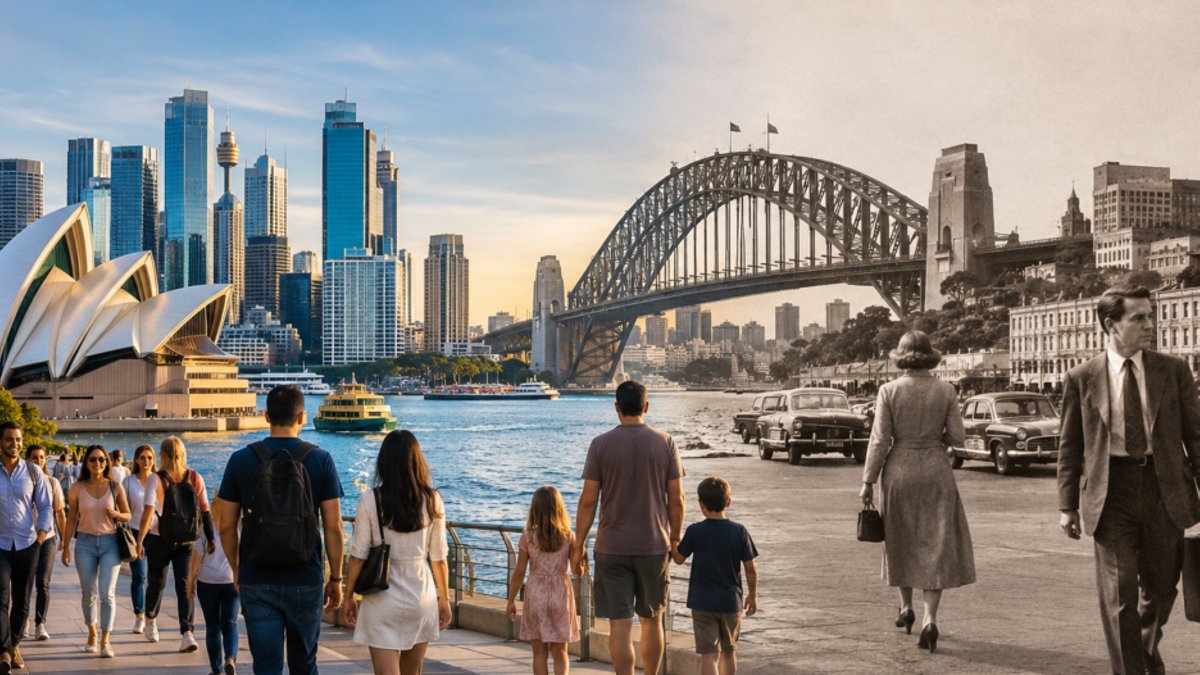
Australia has undergone significant changes since 1981. The country is now larger, older, more multicultural, better educated, and healthier. The population has roughly doubled over the past 45 years and is projected to reach 40 million in the coming decades. This growth necessitates careful planning for housing, infrastructure, and future cities to accommodate the expanding population.
The way Australians work has also transformed. Manufacturing has declined while services, knowledge industries, healthcare, and education have grown. Australians are living longer and healthier lives and ageing differently. This shift has profound implications for retirement, housing needs, and government services, as longer lifespans reshape societal structures.
A Shift in Community and Connection
One of the most notable changes is how Australians connect with each other. In the past, larger families, religious organizations, unions, and political parties provided a strong sense of community. However, participation in these institutions has declined significantly. Demographer Simon Kuestenmacher notes that Australians now have fewer obvious places to experience a sense of belonging. Despite this, sport remains a unifying force in Australian society. Whether it’s supporting the Socceroos or cheering for local teams, sport acts as a “social glue” that brings people together. This is particularly important as Australia becomes larger and more culturally diverse. Creating shared institutions, experiences, and public spaces will be key for supporting connection in the future.
A More Open and Diverse Society
Australia has become more open and diverse. In the 1981 Census, around 160,000 Australians identified as Aboriginal or Torres Strait Islander. By 2021, this number had risen to over 800,000. This increase reflects not only population growth but also a greater comfort in identifying Indigenous heritage. Simon Kuestenmacher attributes this to Australians feeling more proud and safe to self-identify as Indigenous, signaling a more inclusive society.
The country is also more multicultural with around one-third of Australians born overseas. This diversity brings new cultures, cuisines, and ideas but also requires integration and infrastructure to support new arrivals. Australians are also living longer and better with life expectancy increasing significantly since 1981. For instance, international travel, once a luxury in the early 1980s for middle-income Australians, has become more accessible and commonplace. Retirement is also a different experience today. As Simon points out, being 65 today is vastly different from being 65 in 1981. People are healthier, more active, and have more opportunities in their later years, often continuing to work, travel, or care for grandchildren.
The Changing Face of Work and Property Investment
The Australian workplace has undergone a dramatic shift. In 1981, a cartoonist might have depicted the typical worker as a father heading to a factory. Today, that image is more likely to be a knowledge worker in an office or working remotely. While manufacturing still exists, the economy has pivoted towards services, professional occupations, healthcare, education, and knowledge-based industries. This transformation has dispersed employment beyond CBDs, with hospitals, schools, shopping centers, industrial precincts, logistics hubs, and suburban offices becoming major employment centers.
Longer, Healthier Lives and Their Implications
Australians are not only living longer but also enjoying healthier, more active lives. In 1981, life expectancy was 71.4 years for males and 78.4 years for females. By 2021, these figures had risen to 81.3 and 85.4 years, respectively. This longevity has transformed retirement—today’s 65-year-olds may be exercising, traveling, running businesses, or caring for grandchildren rather than facing the physical decline common in the past.
However, this progress comes with challenges. Longer retirements require financial planning for individuals, while governments face increasing pressure to provide healthcare and services for an aging population. The transformation in longevity is an enormous achievement but demands thoughtful adaptation to new realities.
Australia’s journey since 1981 reflects extraordinary progress and adaptation. From a younger, less diverse nation to a multicultural, knowledge-driven society, the changes are profound.