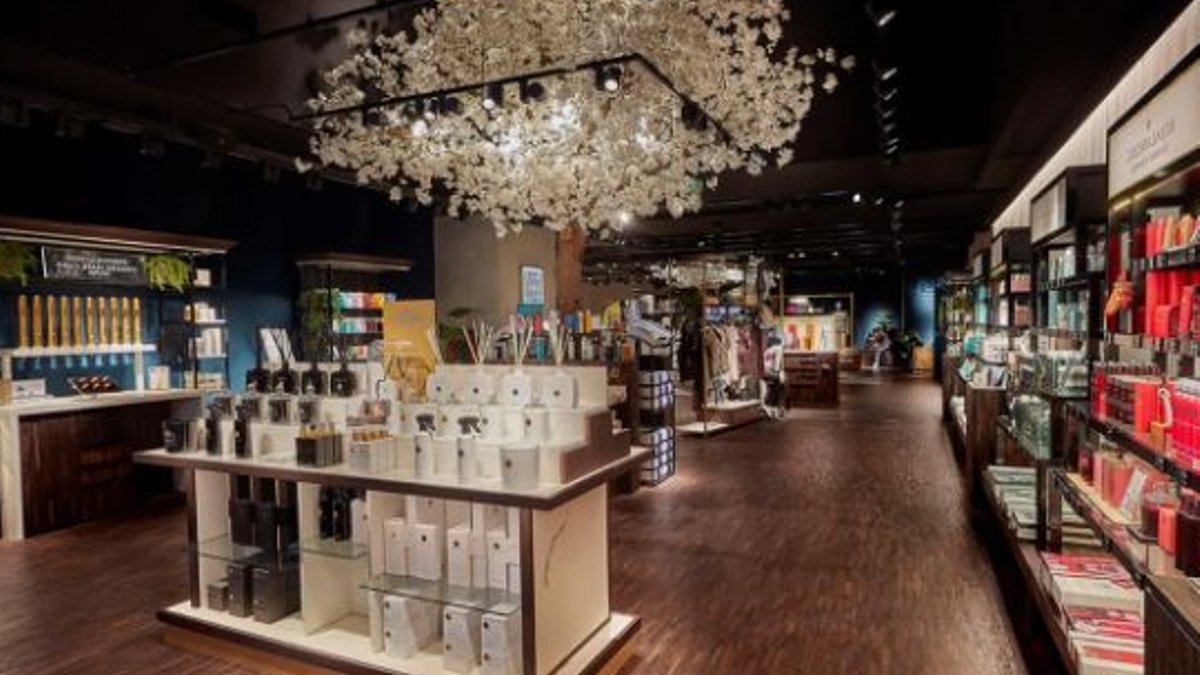
Major beauty brands are betting big on physical stores, defying predictions of retail’s decline. Rituals Cosmetics is leading the charge with a €40 million investment to revamp 1,500 boutiques across 30 countries in just 30 days, a timeline that starkly contrasts with the multi-year refits typical in the industry. This ambitious project, already underway, shows the brand’s commitment to physical retail even as its digital sales surpass 20% of its €2.43 billion revenue.
This ambitious plan, set to complete by September 25, 2026, contrasts sharply with the multi-year approaches typical in retail. The Amsterdam-based brand aims to unify its offerings under a ‘Beauty World’ concept, blending skincare, makeup, hair care, and fragrance. This unified approach reflects a strategic response to consumer demand for seamless, integrated shopping experiences.
A unified beauty experience
Rituals’ Chief Commercial Officer, Gregory Bruyer, emphasizes the importance of physical retail in delivering their brand experience. The rapid renovation, involving 100 teams and 40 stores per day, is a logistical feat rarely seen in any retail category. This operation requires meticulous coordination, from supply chain management to workforce deployment, showcasing Rituals’ operational prowess.
Rituals isn’t alone in this strategy. Douglas, Europe’s largest beauty retailer, plans to open 200 new stores and refurbish 400 existing ones by the end of 2026. Their CEO, Sander van der Laan, highlights their ambition to grow through store expansion and market penetration. Douglas’s plans include a new Luxury Flagship Store in Amstelveen, the Netherlands, focusing on premium brands and K-Beauty, further diversifying its offerings.
The evolving retail market
Sephora, another global player, has adopted a localized approach with its first UK boutique on Carnaby Street, designed to cater to changing high street shopping habits. This smaller, more localized concept reflects a broader trend toward tailoring retail experiences to specific markets and consumer behaviors.
They’re not just refitting stores; they’re demanding high-footfall locations and larger, experiential spaces for services. This trend has significant implications for retail landlords and developers, who must adapt to accommodate these demands. The focus on experiential retail shows the importance of creating spaces that engage customers beyond traditional shopping, incorporating services like consultations and product trials.
Industry data reveals that physical stores remain integral to over 80% of beauty customer journeys. The inability to return opened products and the desire to test before buying keep shoppers coming to stores. This highlights the unique role physical stores play in the beauty industry, where sensory experiences and product trials are key to purchasing decisions.
For landlords, this wave of investment suggests a reevaluation of beauty brands. These companies view stores as valuable marketing channels, not legacy costs, and are willing to pay for prime locations. This shift in perception positions beauty brands as desirable tenants, capable of driving footfall and enhancing the overall appeal of retail spaces.
Read Also: Lübke Kelber appoints Dr. Karsten Lieser, Sahling resigns
Negotiating power shifts
This shift impacts retail leasing negotiations. Beauty brands capable of rapid expansion or large-scale refurbishment, like Rituals and Douglas, are well-positioned to secure favorable terms. Landlords compete for such tenants, who prove their ability to drive footfall in an omnichannel environment. The ability to execute large-scale transformations quickly and effectively gives these brands a significant advantage in lease negotiations.
As e-commerce fatigue sets in, the sensory, in-person experience offered by beauty brands becomes increasingly valuable. Retail real estate professionals may find that beauty is becoming a reliable anchor category in prime European locations. This trend reflects a broader consumer shift toward experiences that cannot be replicated online, reinforcing the importance of physical retail spaces.
The speed and scale of these transformations are notable. Rituals’ 30-day turnaround and Douglas’s 600-store plan by 2026 demonstrate a commitment to physical retail that challenges the narrative of its decline. These initiatives not only revitalize individual brands but also contribute to the overall health and vibrancy of the retail sector.
This trend also reflects a broader consumer behavior shift. While online shopping grows, the tactile nature of beauty products and the desire for personalized experiences keep physical stores relevant. The beauty industry’s focus on experiential retail aligns with consumer expectations for unique, engaging shopping experiences.
The beauty industry’s investment in brick-and-mortar is a strategic response to evolving consumer preferences. By creating immersive, experiential spaces, these brands aim to strengthen customer loyalty and differentiate themselves in a competitive market. This approach mirrors the success of brands like Apple, which transformed electronics retail by prioritizing design and customer experience.
In a similar vein to how Apple Stores transformed electronics retail, beauty brands are redefining their physical presence. This approach may well set a new standard for retail experiences, blending product discovery with sensory engagement. By prioritizing design, service, and customer engagement, beauty brands are creating spaces that resonate with modern consumers.
The coming months will be key for retail landlords and developers. Those who can accommodate the unique demands of beauty brands stand to benefit from this wave of investment. As the industry evolves, the ability to adapt and cater to these changing needs will be a key differentiator in the competitive retail real estate market. Landlords who proactively address the needs of beauty brands will be better positioned to attract and retain these valuable tenants.