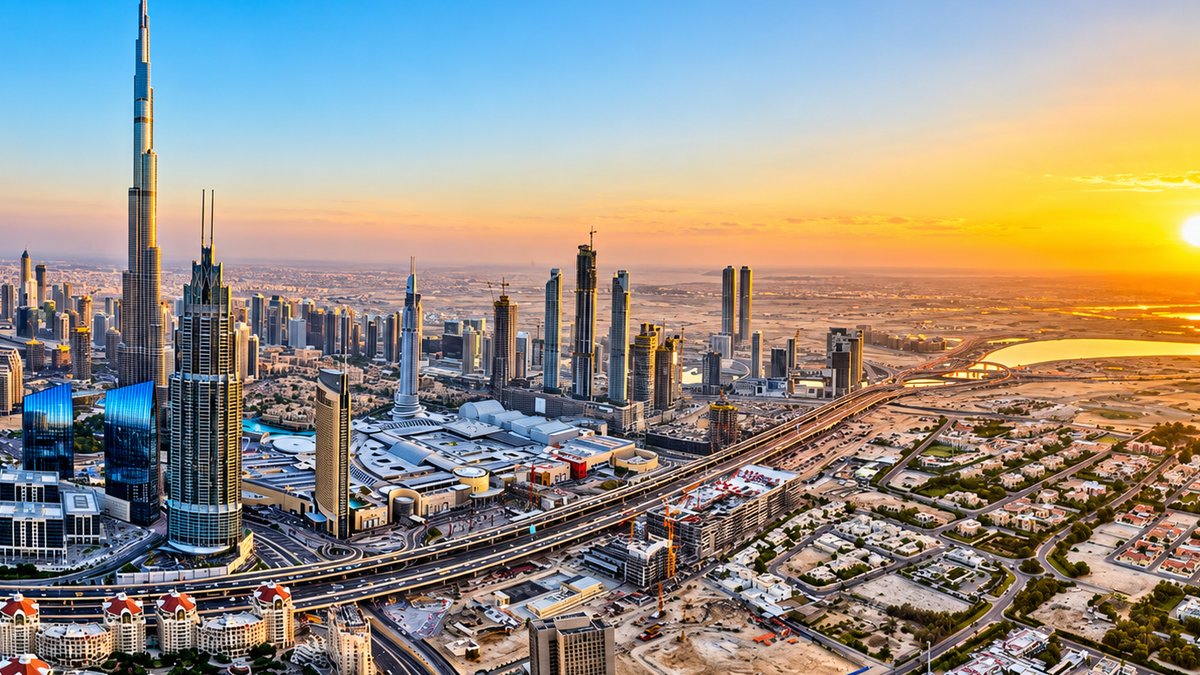
Dubai’s real estate market experienced unprecedented investment levels in 2025, with capital inflows totaling AED 680 billion ($185 billion)—a figure nearly five times the AED 148 billion ($40.2 billion) recorded in 2021. The increase extends far beyond transaction volume alone, according to findings from W Capital Real Estate. During this period, the investor base expanded dramatically, growing from 52,415 participants in 2021 to 193,100 by 2025, while the total number of investment transactions surged from 72,207 to 258,600.
The market’s expansion also brought greater geographic and sectoral diversity. In 2025, Asia and Europe collectively contributed AED 496 billion to the total, with South Asia leading at AED 123 billion and Northern Europe adding AED 56 billion. Meanwhile, North America and Africa accounted for AED 54.63 billion and AED 41 billion, respectively. This distribution signals Dubai’s growing attractiveness beyond its traditional investor base.
Annual growth rates demonstrated volatility over the four-year span. After a 78.5% increase in 2022, the pace moderated to 56% in 2023, then slowed further to 27.7% in 2024 before a slight rebound to 29.3% in 2025. Despite these fluctuations, the cumulative impact was undeniable: by 2025, the market had transformed, incorporating new investor groups and shifting investment strategies.
Investor behavior revealed distinct regional preferences. Non-resident buyers overwhelmingly favored off-plan properties, allocating 83.7% of their capital to developments still under construction, compared to just 16.3% toward ready properties. In contrast, local investors showed a more balanced approach, with 51.2% investing in off-plan projects and 48.8% in completed properties. The report explains this divergence by noting that non-residents typically prioritize long-term returns, while residents often seek immediate occupancy or rental yields.
Walid Al Zarooni, Chairman of W Capital Real Estate, highlighted the market’s evolution beyond traditional factors like price and location. Investment decisions are increasingly linked to net returns, operating costs, liquidity, and long-term growth potential. The emergence of new developments and a wider range of locations gives investors more options for building balanced real estate portfolios.
Sector-specific data reveals how demand has shifted. The residential segment dominated with AED 345 billion in investments, while commercial real estate attracted AED 187 billion, and mixed-use developments accounted for AED 148 billion. Within residential, luxury apartments saw the highest capital allocation at AED 192 billion, followed by villas at AED 115 billion and townhouses at AED 38 billion. This distribution shows the market’s preference for high-value, long-term assets.
Foreign investor confidence remained high, with 68% of total capital inflows originating from abroad in 2025. The United Arab Emirates’ Golden Visa program, which includes real estate investors, played a key role in this trend.
The government has pledged to expand affordable housing initiatives, targeting a 15% increase in mid-market residential supply over the next three years.