Halloween is a $13.1 billion industry, but many of its most recognizable elements began as modest ideas from small businesses. These seasonal staples spread through word of mouth and innovation, eventually evolving into annual traditions. One of the most enduring symbols of the holiday is candy corn, a treat that did not originally target the October season.
From Chicken Feed to Halloween Treat
The confection dates back to the 1880s in Philadelphia, a hub for candy production. At the time, many companies drew inspiration from the natural world, creating sweets shaped like leaves, chestnuts, and pumpkins. George Renninger, an employee at Wunderle Candy, developed a piece of candy that mimicked corn kernels. He also applied a distinct three-color scheme to the treats, a method that involved pouring layers of hot liquid sugar into tiny molds by hand.
“It was laborious,” says Beth Kimmerle, the founder of Attribute Analytics and author of books about candy history. The unusual color scheme gave the candy immediate appeal. It was first marketed as an agricultural-themed novelty and penny candy sold throughout the year, not specifically as a Halloween goody. The connection to October emerged later, driven largely by another company that scaled the product and branded it for the fall season.
Goelitz Confectionery began selling the treat at the turn of the last century. It is unclear if Wunderle and Goelitz had any arrangement regarding the rights to the recipe. Regardless, Goelitz is usually credited with popularizing the candy as a Halloween product. While Wunderle eventually wound down in the 1980s, Goelitz was renamed Jelly Belly in 2001 and later acquired by Ferrara Candy. Ferrara’s Brach’s brand has sold candy corn since the 1920s, and this year the company launched a limited-edition fragrance that smells like the treat.
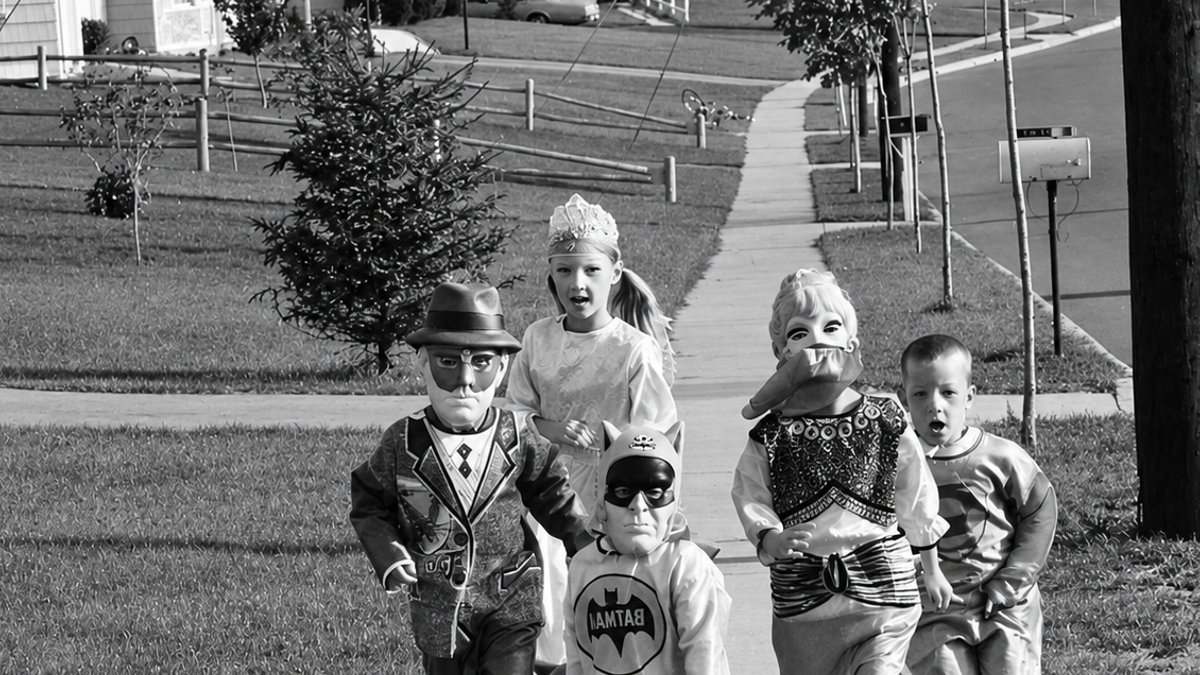
While candy corn has roots in the late 19th century, the concept of dressing up as fictional characters became a commercial standard through the efforts of a single entrepreneur in the mid-20th century. Ben Cooper started his career selling costumes for vaudeville performances. In 1937, his company, Ben Cooper Inc., acquired the license to manufacture costumes based on Disney characters from a company called A.S. Fishbach.
Cooper expanded his catalog as new Disney films were released and later added superheroes like Spider-Man and Batman in the 1960s. By the 1970s, his line included characters from “Sesame Street” and “Star Wars.” The company’s costumes were simple, often consisting of plastic masks and tarps that cost a few dollars. This simplicity made them popular, as they were disposable after a single night of use.
“At its height, the company controlled 80% of the licensed custom characters,” says Rob Caprilozzi, founder of the Horror News Network. Cooper also produced costumes based on U.S. presidents, though he destroyed his inventory of John F. Kennedy masks after the assassination. The business filed for bankruptcy in 1992 and was acquired by Rubie’s Costume, which continues to operate today.
The Birth of the Retail Pop-Up
Joseph Marver did not alter what people wear, what candy they eat, or the type of decorations they display. He changed where they bought these items. Marver ran an apparel shop in Castro Valley, California. October sales were historically slow. He observed that a costume shop across the street was booming. That other store later moved locations. In 1983, Marver decided to enter the Halloween business himself. He put his usual inventory into storage and turned his shop into a store for Halloween merchandise.
“I went to a trade show in Chicago,” Marver said. He picked up everything related to Halloween and placed it in his store. The sales increased rapidly. He doubled down on the strategy the following year. He rented a temporary space in a local mall. The space was used to sell costumes, decorations, and face paint for eight to ten weeks. Retail leases typically lasted a decade, making it hard for newcomers to secure space.
Barbara Kahn, a professor at the University of Pennsylvania, noted the difficulty of temporary leases. Marver described his initial struggles with landlords. Some property owners wanted big chain stores. They realized these chains were not coming. The mall owners agreed to host the pop-ups. They hoped the stores would bring business to other tenants. Marver grew his business to sixty outlets over the next sixteen years. He named the company Spirit Halloween.
The company spent the rest of the year preparing for the season. This involved sourcing costumes and identifying real estate. In 1999, Spencer Gifts bought Spirit Halloween. Marver stayed on as a consultant and later opened a hotel.
The Rise of the Seasonal Pop-Up
Initially, landlords were hesitant to approve short-term leases. However, they eventually agreed to the pop-up model to bring business to other tenants. Marver expanded this concept over 16 years, opening 60 seasonal outlets. His company, Spirit Halloween, was later acquired by Spencer Gifts. Today, the chain operates approximately 1,500 seasonal stores across the United States and Canada.
Commercial Haunted Houses
Walter Knott became famous as the founder of Knott’s Berry Farm. The amusement park has operated for about 80 years. Knott and his marketing team invented the large-scale commercial haunted house. People had previously created informal haunted houses for private use. Charitable organizations also built them to raise funds.
Benjamin Gagne, president of the Haunted Attraction Association, confirmed this history. Knott’s Scary Farm in 1973 was a first. It was a large-scale commercial setup designed to boost ticket sales during a slow season. M. Stang, a scholar at Randolph College, noted the event’s impact. Full-page advertisements promised entry to the “spookiest, ghouliest place in Southern California.” The cost was just $4. The ads promised “bizarre, spooky antics” and “LIVE MONSTERS.”
The attraction distinguished itself by using people in costumes to provide scares. Gagne explained that previous amusement parks had “dark carny rides.” Patrons rode in carts while mirrors and lighting created the mood. Knott’s Scary Farm became an annual tradition. The park still runs the Halloween attraction. It is open for 26 nights this season.