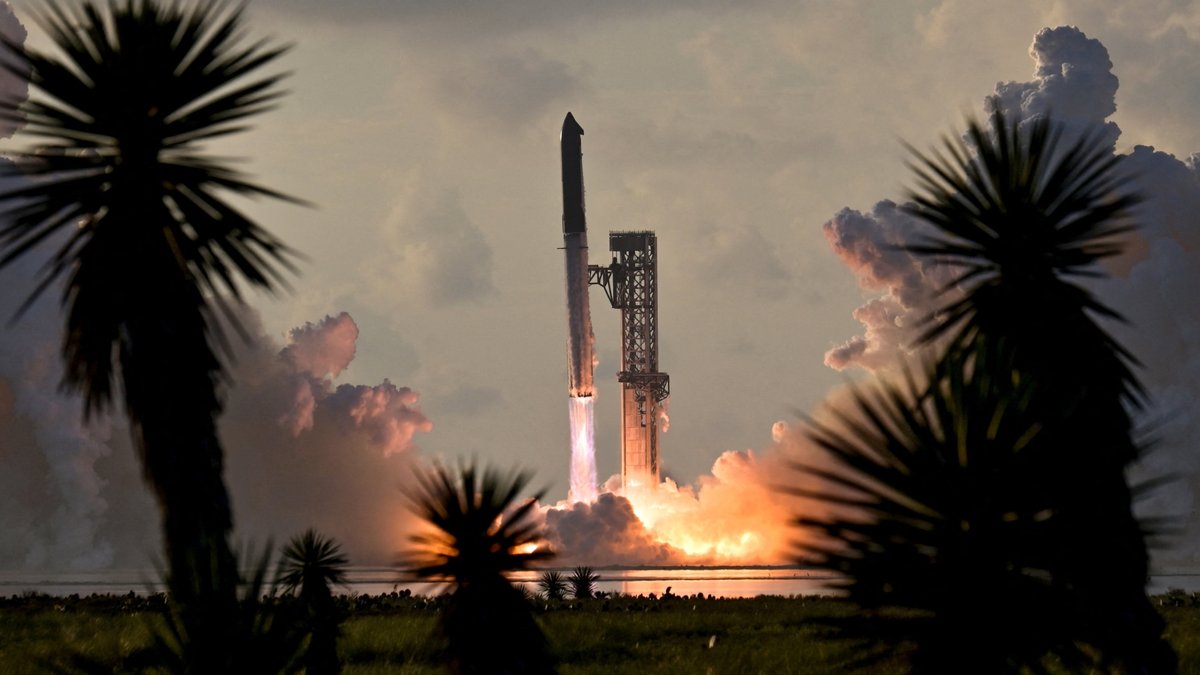
Elon Musk signaled on Tuesday that a SpaceX and Tesla merger could be on the table, a move that would dwarf any prior corporate combination.
Musk signals possible merger
For more than 20 years Musk has run the electric-vehicle maker and the rocket firm side by side, allocating specific days to each enterprise.
The two entities have already shared staff and facilities, from a spacesuit prototype for the Optimus robot to a Roadster model that uses rocket thrusters.
Both businesses are now pushing beyond their original markets, focusing on artificial-intelligence applications that span autonomous transport and satellite networks.
In a brief exchange with investors, Musk said independent director committees at each firm are reviewing a potential transaction, though he added a deal is not guaranteed.
“It’s an odd Kabuki dance where two groups of people are talking and I can’t be in the conversation,” he told analysts during a SpaceX earnings call.
The proposed union would align his vision of self-driving cars, humanoid robots and frequent launches with the data centers and orbital links needed to run them.
Market watchers expect an all-stock arrangement, with the launch company possibly paying a modest premium for shares of the carmaker.
Current estimates place SpaceX at roughly $2 trillion and Tesla at about $1.5 trillion, and shares of both rose after the announcement.
Regulators in several jurisdictions are likely to scrutinize the deal, though Musk’s connections to the current administration may ease the process.
Financial and regulatory backdrop
Board composition remains opaque; several directors sit on both sides, and venture capitalist Ira Ehrenpreis serves on each board.
A recent filing disclosed that last year the carmaker sold $143 million of vehicles to the rocket firm, spent $3.3 million on advertising on platform X, and earned $430 million from Megapack battery sales to the launch business.
Both companies also split expenses for Musk’s private jet and personal security, which are billed through a separate entity.
Employees frequently rotate between projects, and a few executives hold dual titles, such as Charles Kuehmann, who oversees materials at both firms.
Ashok Elluswamy leads AI software at the carmaker while managing a joint venture with the rocket company called Digital Optimus.
Read Also: Saudi Awwal Bank posts strong profit growth
For staff, a merger could streamline career paths, allowing engineers to work on end-to-end solutions without needing to obtain approvals from multiple companies.
Beyond the merger, Musk’s portfolio includes Neuralink, the Boring Company and the AI startup xAI, which merged with the launch firm earlier this year.
He argues that AI services could unlock a market worth tens of trillions of dollars, justifying the need to combine resources.
The business logic is straightforward: the carmaker develops “physical AI” like robotaxis, while the rocket firm provides the data-center capacity and satellite links that keep those systems online.
Investment adviser Ross Gerber warned, “I don’t see what the value of Tesla is if it’s not merged with SpaceX,” suggesting the brain of the automotive operation resides elsewhere.
Earlier this year Musk announced a joint chip venture with the rocket firm and Intel, aiming to design and produce processors in Texas.
He described it as the most ambitious chip-building effort to date, highlighting the hardware needs of both enterprises.
The merger would also address Musk’s divided attention and the limited control he has at the publicly traded carmaker.
Tesla’s board and roughly 30% of shareholders hold voting power, while Musk’s stake sits near 20%.
When the launch firm went public in June, its structure gave Musk over 80% voting control, making his position virtually unassailable.
If the acquisition proceeds, Musk is expected to retain leadership of the combined entity, preserving his decisive influence over future strategy.
Governance, regulatory and strategic considerations
Special committees composed of independent directors are reviewing the possible combination, though the exact membership lists remain undisclosed.
Within the automotive operation, recent performance challenges prompted the leadership to signal a willingness to relocate artificial-intelligence initiatives unless additional voting influence was granted.
A compensation plan approved late last year created a mechanism for the chief executive to increase his equity position, potentially changing future control trends.