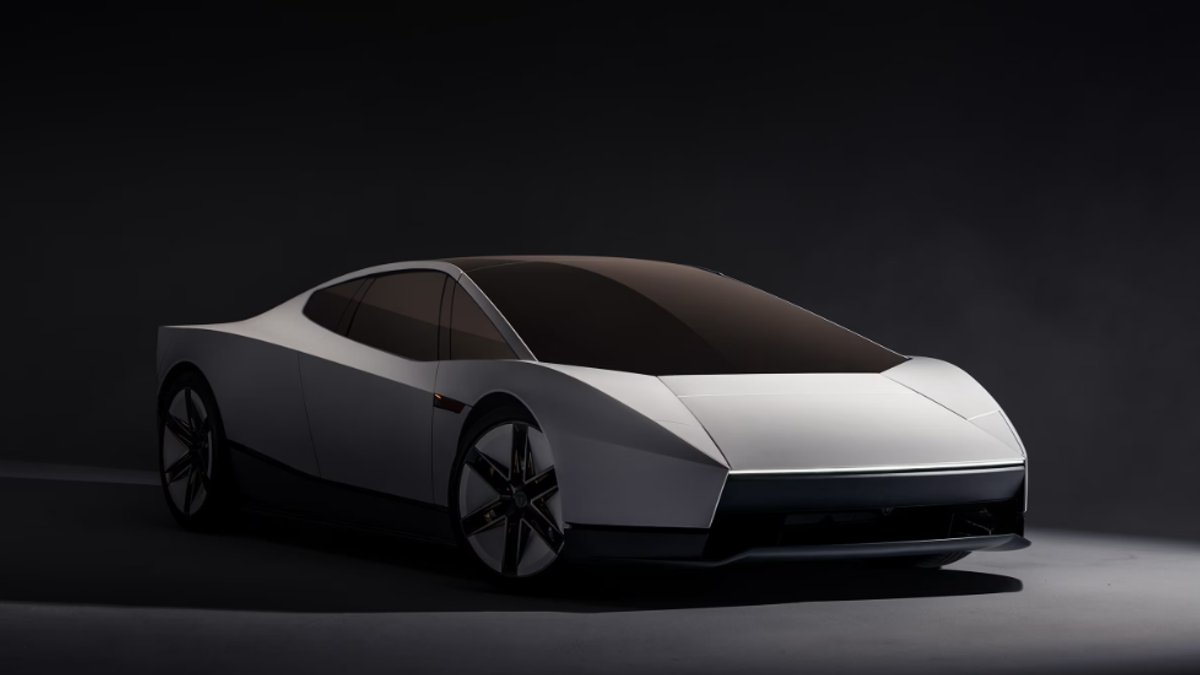
Tesla has officially unveiled its completely overhauled Roadster, delivering the aerial spectacle that CEO Elon Musk has long promised. The vehicle rolled onto a sharply curved ramp at a SpaceX testing site near Waco, Texas, where it employed a suction mechanism to grip the ramp’s underside before launching skyward. Cold-gas thrusters then helped stabilize the car as it spun and touched down. During a second demo, the Roadster cleared a row of Tesla models, including a Semi and Cybertruck.
Stunt Significance
The demonstration did not establish Tesla as the maker of a true flying car. The vehicle failed to show sustained, controlled flight typical of aircraft or electric vertical take-off and landing vehicles. Instead, the thrusters enabled brief propulsion bursts, rotation, and precise landing. “We’re not talking about sustained flight,” Smithsonian National Air and Space Museum curator Roger Connor told CNN. “We are literally talking about hopping.”
Read Also: Dubai real estate investment boom draws global capital
The technology mirrors rocket reaction-control systems more than traditional flying-car powertrains. Instead of generating steady lift via wings or propellers, the system releases highly pressurized gas to create short thrust pulses. Tesla engineering vice-president Lars Moravy noted the system uses roughly 600 litres of compressed air. Carbon-fibre-wrapped pressure tanks positioned throughout the car supply thrusters for acceleration, lift, and directional control.
Tesla asserts all variants will provide roughly 300 miles—or 483 kilometres—of driving range and a top speed over 230mph, or about 370km/h. These figures remain company claims rather than independently verified production specs.
Configurations and Pricing
Tesla detailed three planned Roadster models. The two-seat Performance variant uses active aerodynamics and a multi-mode suction system to boost downforce, enabling the car to stick to steep or inverted surfaces. The two-seat Thrust model adds rear-mounted cold-gas thrusters designed to achieve 0-60mph acceleration in under one second. The top-tier single-seat Rocket version features 10 thrusters positioned around the vehicle, which carried out the airborne maneuvers showcased in Texas.
Read Also: Key Strategies for Property Negotiation Success
Reservations have reopened in select regions. Tesla requests US$50,000 to reserve the Performance model and US$250,000 for the Thrust. The Rocket is invitation-only. No final purchase price was disclosed, and Tesla has not confirmed Australian pricing, delivery schedules, or regulatory approval. Musk stated production would start in 2028; this should be viewed as an aspiration rather than a fixed timeline.
The second-gen Roadster was first revealed in 2017, with initial plans for customer delivery years later. The project encountered delays in 2020, 2021, 2023, and 2024. Some buyers have maintained sizable reservations for nearly ten years. Significant regulatory hurdles persist. A road-registered vehicle designed to intentionally depart from the ground, rotate, and land amid traffic does not align neatly with current vehicle safety standards. Its compressed-air system, pressure tanks, and unusual maneuvers would demand thorough safety evaluations.